
Project guidance
Repainting a flat between occupiers
An empty flat removes some obstacles but introduces a different set of decisions. The useful plan connects the decorating scope with the people holding keys, approving changes and preparing the property for its next use.
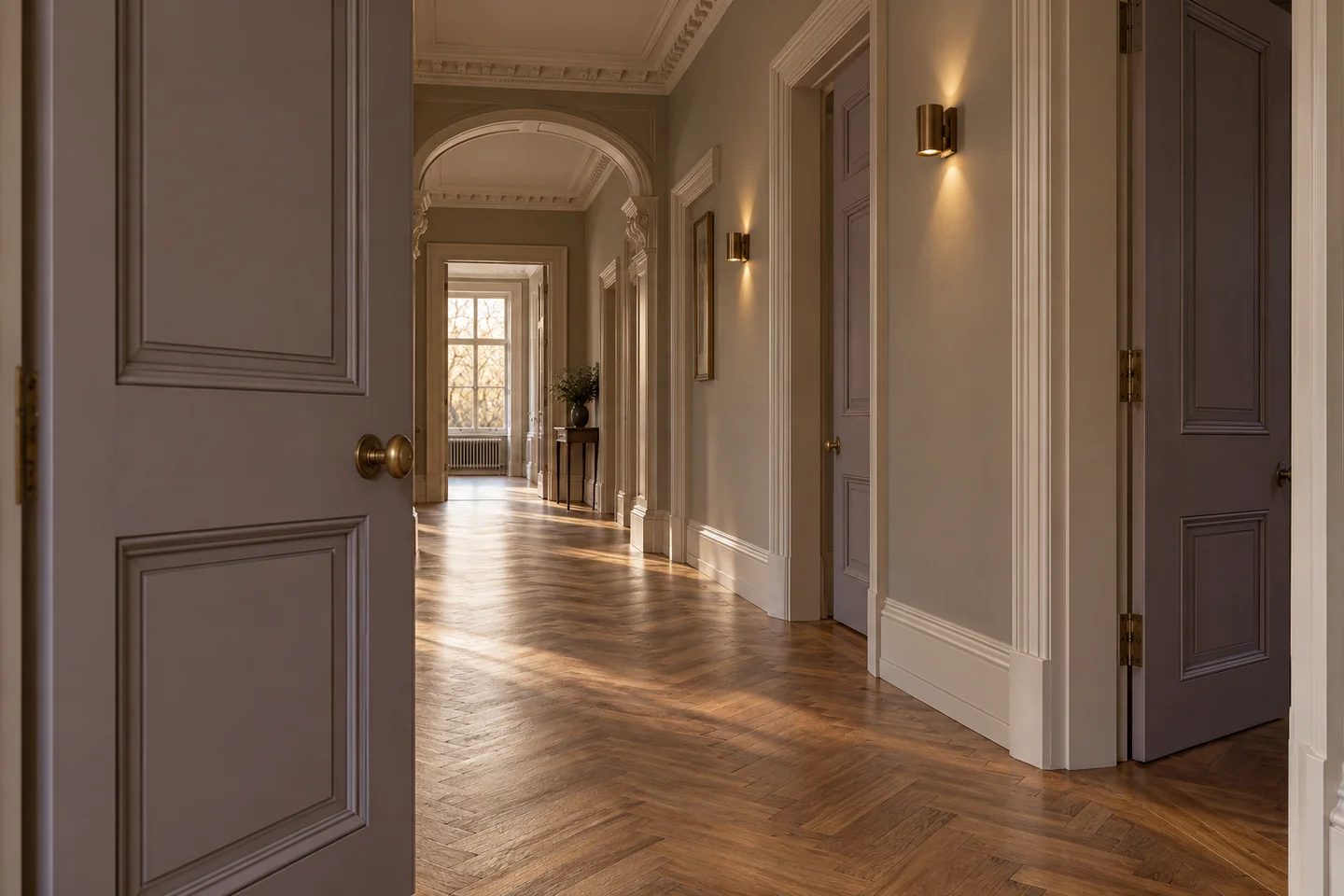
Assess the rooms after they are cleared
An occupied viewing can hide marks behind furniture and damage around curtain fittings. Review the accessible surfaces once belongings have moved, using a room list to distinguish local repairs from full redecoration. Flag any active damp, failed plaster or unfinished work by other trades. Those items need a resolved cause or separate instruction before they can sensibly enter the painting programme.
Keep the owner’s approval route available
For a landlord, agent or absent owner, nominate someone who can answer questions about the scope while work is being planned. Provide existing finish references and identify selections that still need approval. If keys are held by a concierge or another agent, confirm their release arrangements. A spare set is useful only when the building permits its use.
Plan around fixed appointments
List the proposed dates for cleaning, inventory, furniture delivery, photographs and occupation. Agree which depend on the decorating work being complete and ready for normal contact. Drying and ventilation requirements follow the selected products and site conditions; they should not be compressed into an unsupported promise about turnaround. Resolve the practical sequence before confirming appointments with others.
Include the edges of the brief
Check wardrobe fronts, cupboard interiors, the back of the entrance door and the corridor ceiling. Decide whether each belongs in the requested work. Separate common-hall faces or exterior frames that require the building’s approval. This avoids a handover conversation about surfaces that were visible but never included in the accepted instruction.
Agree how the flat will be reviewed
An owner returning after decoration and a letting agent preparing a new tenancy may need different review arrangements. Decide who attends, how remaining items are recorded and when keys are collected. Keep the final room schedule and product references in the property file. If spare materials are retained, label them by room and confirm their storage location.
Preparation after furniture leaves a let flat
The useful survey of a flat between occupiers happens after the rooms have been cleared. Marks behind sofas, raw plugs and scuffed skirtings become visible, and so do cracks that furniture had stood in front of. Go round with a room list and separate a full redecoration from a local repair. Look up as well as along: corridor ceilings, the tops of wardrobes that are built in, and the junction of ceiling and cornice. Test for a live damp problem before filling a stain. If plaster is loose or another trade has left a surface unfinished, pause that item until the cause is dealt with or a separate instruction accepts the limit. Degrease kitchen and bathroom walls and the door edges everyone touches. Decide, in writing, whether cupboard insides and the back of the flat entrance door are included. Protect any floor that is staying, even when the rooms look bare, and keep dust out of a fitted kitchen. Photograph the defects you will treat and those you will leave, so the owner and the agent share one picture of the starting point. That set of notes becomes the preparation section of the instruction.
Ventilation and the appointments that depend on dry paint
Between occupiers, the calendar fills quickly with cleaning, inventory, photographs, furniture and the next arrival. Decoration has to say which of those appointments need paint that is ready for normal contact. The product and the flat’s ventilation set the gap between coats and the wait before washing or heavy use. A closed pied-à-terre with the heating off can behave differently from a flat with windows open on a mild day, so the programme should say who airs the rooms. Do not compress that interval into a promise that the work can always be fitted around a date already given to someone else. Share the sequence with the keyholder, whether that is an agent, a concierge or the owner, and confirm the building will allow the access you are relying on. When the review happens, agree who attends and how snags are written down. Spare paint, if it is kept, should be labelled by room and stored where the next instruction can find it. The property file then holds the room list, the product references and the exclusions together, which is what a later tenancy change will need.
A property in Victoria
Tell us what
you have in mind.
A private flat, a residential block or a commercial floor: describe the space and the changes you are considering. Your address, a room list and any constraints on access will help frame the discussion.
Your decorating enquiry
Add the property location, your proposed scope and any dates or building requirements we should consider.