
Project guidance
Access, parking & working hours
A central address needs a practical route from vehicle to workface. Establish that route before fixing the programme, including the permissions for the street and the rules of the building receiving the materials.
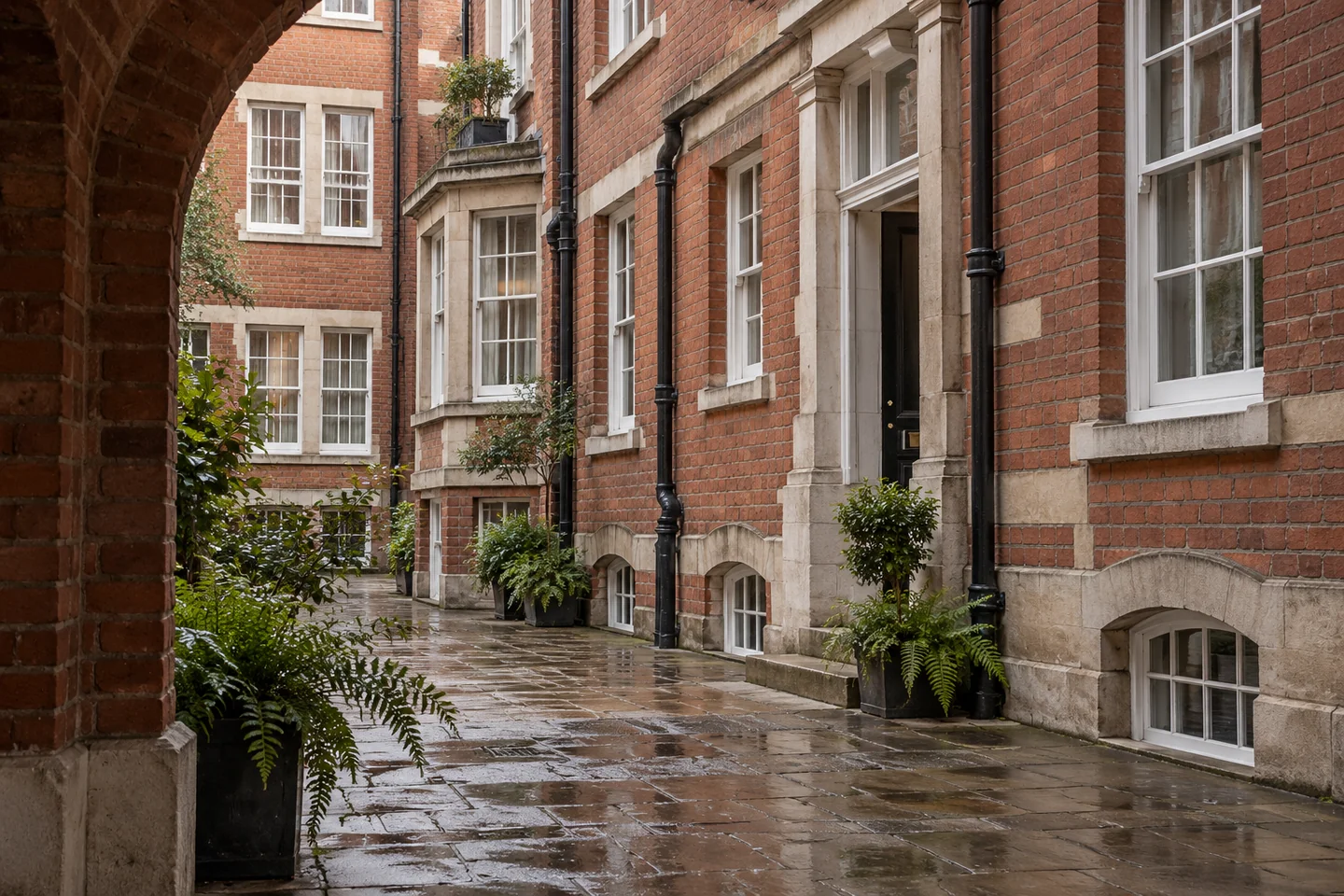
Locate the receiving point
Victoria connects Underground, rail and bus services; the station is a useful orientation point, not a delivery instruction. Give the exact entrance, any service door and the contact meeting the vehicle. Check carrying distances, lift access and storage. Identify the authority responsible for the road and inspect the current signs before selecting a parking or unloading arrangement.
Sources: TfL: Victoria station and transport links; National Rail: London Victoria
Use the correct parking process
Westminster provides parking-bay suspension and yellow-line dispensation processes for qualifying work or heavy-equipment deliveries. They are separate arrangements, so use the route appropriate to the proposed location and activity. Confirm requirements and lead times directly with the council, then assign responsibility for the application and its cost in the project proposal.
Sources: Westminster: parking-bay suspensions; Westminster: suspensions, dispensations and skips
A skip or scaffold needs its own permission
The council requires a skip licence for a skip on the street and directs applicants to its highway licensing process for temporary structures. Work extending onto or over the public highway needs the appropriate licence. A parking arrangement does not replace those permissions. Record the planned footprint, dates and responsible applicant before equipment is booked.
Sources: Westminster: skip licences; Westminster: temporary structures, cranes and road closures; Westminster: managing a building site safely
Distinguish ordinary hours from an evening request
Westminster gives standard construction hours as 8am–6pm on weekdays and 8am–1pm on Saturdays. Sundays and bank holidays are outside those hours. Check its out-of-hours approval process for applicable work; the council directs longer runs of out-of-hours construction or street activity to the Section 61 route. Building rules may add further constraints, so agree the actual activities and permissions before scheduling them.
Sources: Westminster: out-of-hours working approval; Westminster: construction noise and permitted hours
Check the vehicle and journey separately
TfL operates separate Congestion Charge and ULEZ schemes. Check the destination, travel date, vehicle and any applicable discount or exemption through its current services. A vehicle meeting an emissions standard does not resolve every possible road-user charge. Keep the journey check with the delivery arrangements and revisit it if the route or vehicle changes.
Sources: TfL: Congestion Charge; TfL: Ultra Low Emission Zone; TfL: check a vehicle’s applicable charges
Ordering the journey from vehicle to the Victoria workface
Treat the station as a landmark only. London Victoria is a rail terminus with Underground and bus connections, which helps a visitor orient themselves, and it does not grant a stopping place for a decorating vehicle. Write the journey as a chain: the road authority, the current signs, the entrance that will receive materials, the person who will meet the driver, the carrying distance, and whether a lift may be used. Westminster’s parking pages separate a bay suspension from a yellow-line dispensation. Pick the route that matches the kerbside you need, and confirm the present requirements with the council, including notice, because the published pages do not fix a lead time or a fee for this website to repeat. Put the applicant and the cost responsibility into the proposal so they are not left implied. If the vehicle or the date changes, run TfL’s checker again. Congestion Charge and the Ultra Low Emission Zone are different schemes, and meeting an emissions test does not answer every charge. A vehicle that is suitable on one ground can still need a separate decision about the zone, the discount or the exemption.
Sources: TfL: Victoria station and transport links; National Rail: London Victoria; Westminster: parking-bay suspensions; Westminster: suspensions, dispensations and skips; TfL: Congestion Charge; TfL: Ultra Low Emission Zone; TfL: check a vehicle’s applicable charges
Pavement licences when decoration reaches the public highway
Paint on an upper window or a porch often needs equipment that stands on, or reaches over, the pavement. Westminster asks for a skip licence when a skip is placed on the street, and it directs temporary structures, including scaffolding, through its highway licensing route. A bay suspension does not stand in for either of those. Work that encroaches on or over the public highway needs the appropriate licence, and the pages on managing a building site safely put the responsibility for that arrangement on the person conducting the work. Record the footprint, the dates and the named applicant before the equipment is booked. Ordinary construction hours run from 8am to 6pm on weekdays and from 8am to 1pm on Saturdays. Sundays and bank holidays sit outside those hours, and noisy work then needs the council’s permission. Longer runs of out-of-hours construction or street activity are directed towards the Section 61 route. Building rules may be tighter still. List the activities you actually intend — delivery, erection, sanding, application, strike — and match each one to the permission it requires. The decorating specification should say who obtains each licence and how the entrance stays usable while the equipment is up.
Sources: Westminster: skip licences; Westminster: temporary structures, cranes and road closures; Westminster: managing a building site safely; Westminster: out-of-hours working approval; Westminster: construction noise and permitted hours
A property in Victoria
Tell us what
you have in mind.
A private flat, a residential block or a commercial floor: describe the space and the changes you are considering. Your address, a room list and any constraints on access will help frame the discussion.
Your decorating enquiry
Add the property location, your proposed scope and any dates or building requirements we should consider.