
Victoria Painters & Decorators
Colour, finish & wallcoverings
In a Victoria room, a colour earns its place beside the materials already there. Begin with the floor, the daylight and the timber details, then develop the walls and ceiling as a complete composition.
Discuss your project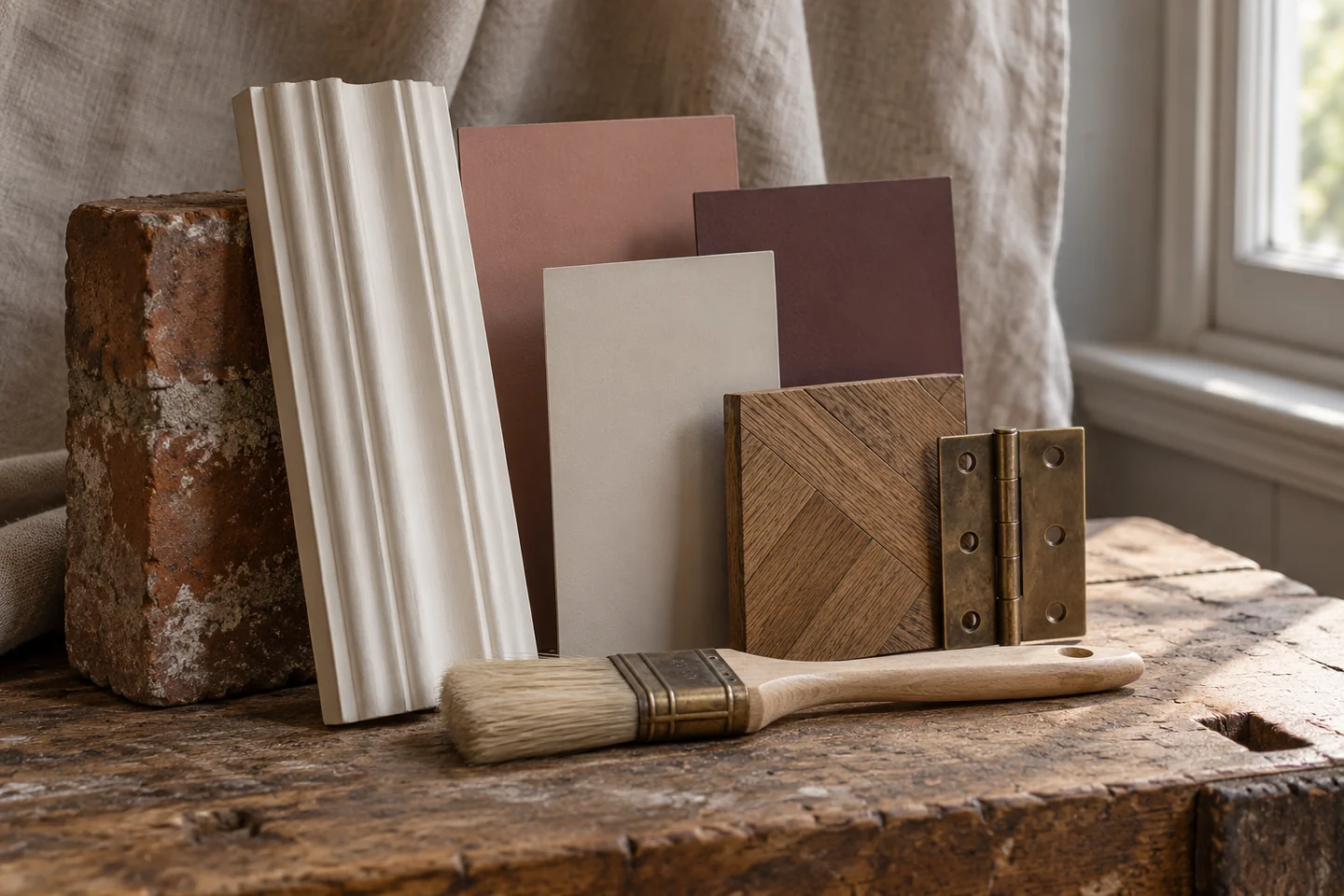
The room has its own light
Review samples at the window, at the entrance and in the deepest part of the space. An enclosed courtyard outlook can give a different reading from an open street view. Use the lamps that will remain in the room, too. Judge the samples at a useful scale before accepting a colour that looked convincing on a small card.
Let joinery connect the scheme
Compare wall colours with the proposed finish on skirting, doors and architraves. Where a corridor links several rooms, a consistent timber treatment can create continuity without requiring identical walls. Decide whether fitted cupboards should recede or become a feature. Include the visible edges and internal faces you want decorated in the written selection.
Place a pattern deliberately
For wallpaper, consider the first view into the room and the main uninterrupted wall. Plot the repeat around door heads, chimney breasts and paired alcoves before agreeing quantities. Confirm the paper, batch and manufacturer’s hanging instructions. A narrow return deserves a layout decision just as much as a broad feature wall.
Preparation follows the actual background
Identify existing papers, lining and visible surface defects during assessment. Removal can reveal an uneven background or earlier decoration, so explain how discoveries will be reviewed before further work is instructed. Where a sensitive historic finish may be present, seek suitable advice. The proposed wallcovering should follow a resolved preparation method rather than conceal an uncertainty.
Keep the accepted selection usable
Create a room and component schedule recording product, colour, sheen and approved sample. For shared spaces, obtain the building representative’s decision in the same record. Note any items still awaiting agreement before ordering. Keep spare material labels with the schedule so a later repair can refer to the precise selection rather than a remembered shade.
Primers and sheen chosen for the background in the room
A colour choice is unfinished until the coating suits the surface under it. Emulsion for a broad wall, a harder-wearing finish for a passage or stair, and a joinery paint for doors and skirting answer different kinds of wear. Sheen should follow cleaning and the way light falls, rather than one tin being spread across every component. Stain-blocking, knotting and adhesion primers answer different faults, and the fault you can see should choose the first coat: a water mark, a glossy oil layer, leftover paper adhesive, or new skim. A finish coat is not a primer. Where paper is stripped, expect the plaster beneath to need making good, and wait to fix quantities until that ground is understood. In strong daylight a higher sheen will emphasise every ridge, so the preparation has to be finer if that sheen is wanted. Record product, colour and sheen against each component. A later repair can then repeat the system, using the schedule rather than a dried sample that has shifted in the tin.
Setting out pattern so wallpaper meets the architecture
Wallpaper needs a layout as well as a product name. Measure the drop, the repeat and the usable width, and decide where the first length falls so a motif is not sliced through the middle of a chimney breast or hard against a window. Plan paired alcoves together. A narrow return beside a door still needs a decision: paper it, paint it, or stop the pattern on the reveal. Confirm the batch, the adhesive the maker specifies, and whether paste goes on the wall or on the paper, because that changes both timing and the protection required. Keep paste off retained timber and stone, and cover floors and fitted furniture before any lengths are cut. Lining paper, where it is used, is part of the preparation and should be counted in the quantities and in the drying time before the decorative paper is hung. If an older paper might be significant, pause for advice before stripping. Keep a labelled offcut with the room schedule. The starting point, the hanging method and the edges that stay painted are what make the room look set out on purpose.
Questions about Colour, finish & wallcoverings
What does colour and wallcovering advice cover, and what does it leave to other services?
This page chooses the finish once the surfaces are known: primer, sheen, colour and pattern, judged against the floor, the light and the joinery. It includes how a paper meets a cornice, an architrave or a corner. It does not decide whether bare external brick may be painted, and it does not obtain consent or a scaffold. Which landings are in a contract sits on the communal page. Open this page when the room list, or the already-painted joinery, is settled.
How are primer and sheen chosen for the background in a Victoria room?
The coating, the plaster and the timber are identified before a product is named. New plaster and a powdery or glossy ground do not take the same first coat. Sheen follows use: a hall that will be wiped is not treated like a ceiling that is only seen. Samples are read by the window, deeper in the room and under the lamps that stay, because a courtyard and a street do not give the same colour. A small card is not the final decision.
What should I send when I want a colour or a pattern included in a quotation?
Send the rooms, photographs in daylight, and a note of the floor and any stone or tile that will remain. Say which joinery must relate to the walls, and whether a paper is proposed on every wall or only on some. If a previous reference exists, include it so the new choice can be compared with what is already there. For a common stair, say who may approve the sample. For an external colour, confirm that the exterior page has named the faces that may be painted.
How are samples, drying and recoats handled before a finish is put into use?
An accepted sample is labelled with the room and kept with the product name and sheen. Coats follow the maker’s interval. A surface that will be washed, papered or set against furniture waits until that interval allows it. Pattern is set out so drops meet the cornice and the corners, rather than starting from a convenient edge. Ventilation is noted where windows do not open fully. The written selection is what a later repaint can follow.
Related services
Relevant areas in Victoria
A property in Victoria
Tell us what
you have in mind.
A private flat, a residential block or a commercial floor: describe the space and the changes you are considering. Your address, a room list and any constraints on access will help frame the discussion.
Your decorating enquiry
Add the property location, your proposed scope and any dates or building requirements we should consider.